Building Insurance for VvE: Documents and Claims
Shared Ownership Requires Precise Documentation
In a homeowners’ association structure, shared ownership creates a different risk profile than a single-owner property. A VvE building insurance policy must protect common areas, structural elements, and the collective financial interests of all unit owners. That only works when records are complete, current, and easy to verify. If ownership shares, maintenance responsibilities, or insured values are unclear, problems can appear later during underwriting, renewal, or a claim review.
Precise documentation also helps the insurer understand how the building is managed. A VvE is not just insuring walls and roofs; it is insuring a living property with shared decision-making, reserve funds, contractors, and rules for maintenance. When these elements are documented properly, the policy can be aligned more accurately with the building’s actual risks, which may also support better terms and fewer disputes.
Good documentation does more than satisfy an insurer; it protects every co-owner when damage, delays, or disagreements arise
For boards and property managers, this means treating insurance as an operational process rather than a one-time purchase. Keep ownership records, maintenance files, and policy schedules organized and accessible. That discipline strengthens the entire VvE claim process, because the insurer can quickly confirm what is insured, who is authorized to act, and whether the damage falls within the agreed cover. In multi-unit buildings, documentation is not paperwork for its own sake; it is part of responsible governance.

What Documents Does VvE Building Insurance Need?
Most insurers ask for a core set of required documents before issuing or renewing VvE building insurance. These records help establish the building’s value, construction type, occupancy, and maintenance condition. While exact requirements vary by provider, a VvE should expect to submit foundational information that shows how the property is owned and managed.
Commonly requested items include:
the deed or governing documents defining the VvE structure
recent meeting minutes showing board decisions and approvals
a building valuation or reinstatement value assessment
maintenance plans and inspection reports
details of previous claims and existing damage
an owner or occupancy overview for all units
the current policy schedule, if switching insurers
Insurers may also ask about security systems, roof age, facade condition, lifts, shared installations, or sustainability upgrades. The goal is not simply administrative compliance. These records help prevent underinsurance, which can be especially costly in multi-unit buildings where rebuilding costs rise quickly after a major event.
A practical approach is to create a single insurance file that is updated after every annual meeting, inspection, and major repair. That makes renewals smoother and reduces delays if damage occurs. When the required documents are complete and consistent, a VvE is in a stronger position to negotiate cover, compare options, and avoid unpleasant surprises when a loss needs to be reported.
How Should a VvE Claim Be Filed?
A successful claim starts with a fast, organized response. The VvE claim process should begin as soon as damage is discovered, especially when there is water intrusion, storm impact, fire, or vandalism affecting shared property. The first priority is always safety. Secure the site, prevent further damage where possible, and document the incident before repairs change the evidence.
In most cases, the board, property manager, or another authorized representative should notify the insurer. The claim should include the date of loss, the location, a clear description of what happened, and photos or videos showing the extent of the damage. If third parties are involved, gather contact details and any witness statements. Keep invoices for emergency measures, since temporary mitigation costs may also be relevant.
Insurers handle claims more efficiently when the timeline, evidence, and decision-makers are clear from the start
To keep the process efficient, a VvE can follow a simple internal checklist:
report the incident immediately
take photos and preserve damaged materials if safe
inform affected residents about next steps
collect repair estimates and emergency invoices
share only verified facts with the insurer
Clarity matters because shared ownership can complicate responsibility. Some damage belongs under the building policy, while other losses may sit with a resident’s contents insurer. A structured VvE claim process helps avoid overlap, missed deadlines, and disputes over who should act on behalf of the association.
Common Damage Events in Multi-unit Buildings
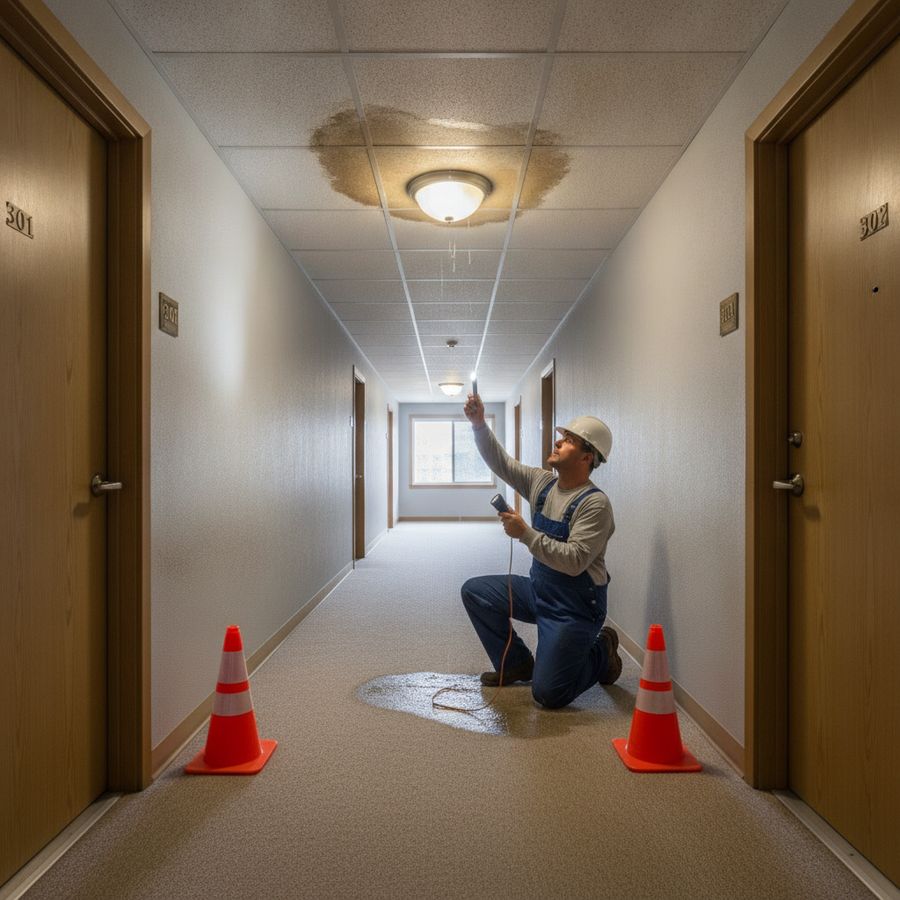
Multi-unit buildings face a wide range of risks because many households, installations, and common systems operate under one roof. The most frequent claims often involve water damage, storm damage, fire, impact, and liability issues linked to shared spaces. Even a small leak in one unit can spread through floors, walls, and electrical systems, affecting multiple owners and increasing total repair costs.
Water remains one of the most disruptive events for a VvE. Roof failures, burst pipes, blocked drains, and leaking seals around windows or balconies can all trigger expensive chain reactions. Storms can damage roofing, facades, glazing, and communal outdoor areas. Fire incidents may begin in a private unit but quickly threaten corridors, service shafts, and structural components covered under VvE building insurance.
Other recurring events include:
damage to lifts, shared technical installations, or intercom systems
glass breakage in entrances and communal areas
vandalism in stairwells, storage rooms, or parking facilities
liability claims from slips, falling roof tiles, or loose facade parts
Because losses can affect several households at once, prevention has a direct financial benefit. Regular inspections, prompt maintenance, and clear resident reporting procedures often reduce both claim frequency and severity. For insurers, well-managed multi-unit buildings are generally easier to underwrite. For a VvE, understanding common damage patterns makes it easier to choose practical cover limits, prepare required documents, and respond faster when something goes wrong.
Are There Discounts Available for VvE Policies?
Yes, policy discounts may be available for a VvE, but they usually depend on risk quality rather than simple price promotions. Insurers often look favorably at buildings with strong maintenance routines, updated safety features, professional management, and a clean claims history. In other words, discounts are more likely when the VvE can show that the building is well governed and less likely to generate avoidable losses.
Several factors may support better pricing on VvE building insurance:
multi-year maintenance planning and documented inspections
modern fire detection or security systems
recent roof, facade, or pipe upgrades
higher deductibles that the association can responsibly absorb
bundling related covers with one insurer
few or well-managed prior claims
That said, lower premiums should never be the only goal. A discount loses value quickly if the policy has gaps, restrictive wording, or inadequate insured sums. Boards should compare total protection, not just annual cost. This is especially important in multi-unit buildings, where one major event can affect dozens of residents and lead to complex recovery work.
The best discount is often the one earned through better risk management, not the one advertised with the lowest price
To improve pricing over time, keep the insurer informed about upgrades and provide updated required documents at renewal. A VvE that demonstrates consistent care, transparent administration, and proactive prevention is often better positioned to secure sensible terms and sustainable policy discounts.
Policy Wording That Protects Collective Interests
For a VvE, the quality of insurance is determined not just by premium or headline cover, but also by the policy wording. This is crucial as it defines how collective interests are safeguarded when a real loss occurs. In shared ownership, ambiguous definitions can lead to disputes among the association, individual residents, contractors, and the insurer. Clear wording ensures everyone knows what falls under the building's coverage, what is excluded, and how claims are processed.
Boards should carefully review definitions related to common property, accidental damage, storm thresholds, water ingress, glass cover, and liability in common areas, as well as how improvements made by unit owners are addressed. It's also advisable to consider conditions surrounding underinsurance, deductibles, vacancy, maintenance obligations, and emergency measures. These elements significantly impact the outcome of the VvE claim process.
Useful policy wording often supports the collective interest by clarifying:
who may report and manage a claim on behalf of the VvE
how costs are allocated when private and shared elements are both affected
whether temporary accommodation or mitigation costs are covered
how rebuild value is assessed after a major loss
Strong wording reduces uncertainty at the worst possible time. It can also prevent disputes among owners, which is crucial in multi-unit buildings where one incident may affect many households. Before renewal, the board should review the policy with a practical lens: does this contract genuinely protect the building as a community asset? If the answer is unclear, the wording likely needs closer attention.
FAQs
What documents are usually required for VvE building insurance?
Insurers commonly ask for the VvE deed or governing documents, meeting minutes, a building valuation or reinstatement value assessment, maintenance plans, inspection reports, prior claims information, occupancy details, and the current policy schedule if the association is switching insurers.
How should a VvE file a building insurance claim?
A VvE should act quickly after damage is discovered: secure the area, prevent further loss if possible, document the damage with photos or video, notify the insurer through an authorized representative, and provide the date, location, facts of the event, and any emergency invoices or repair estimates.
What types of damage are most common in multi-unit buildings?
Common events include water damage, storm damage, fire, vandalism, glass breakage, liability incidents in shared spaces, and damage to lifts or other shared technical systems. Water losses are especially disruptive because they can spread across multiple units and common areas.
Can a VvE get discounts on building insurance?
Yes, some insurers may offer better pricing when the building shows strong maintenance routines, professional management, updated safety systems, recent upgrades, a clean claims history, or a deductible the association can realistically absorb. Discounts usually depend on risk quality, not simple promotions.
Why does policy wording matter for a VvE?
Policy wording determines how shared interests are protected during a real loss. Clear definitions of common property, water ingress, storm damage, liability, underinsurance, deductibles, and claim authority can reduce disputes between owners, the board, contractors, and the insurer.


Reacties
Een reactie posten