Property Liability Insurance Explained for Investors
Claims Visitors Can File After Accidents
For property investors, accidents do not have to involve tenants to become expensive. A delivery driver slipping on a wet entryway, a contractor tripping over loose flooring, or a guest being injured by falling debris can all trigger claims against the property owner. This is where property liability insurance and public liability insurance become essential parts of risk management.
In most cases, injured visitors may seek compensation for medical costs, lost income, rehabilitation expenses, and pain and suffering. If the claim alleges that you failed to maintain reasonably safe premises, the issue quickly shifts from a simple accident to a legal and financial liability question. Even if you believe you were not at fault, defending a claim can still be costly.
A minor accident on an investment property can become a major liability event if documentation, maintenance, and insurance are not in place
Common visitor claims often involve:
Slip-and-fall injuries in entrances, lobbies, or parking areas
Trips caused by uneven pavement, loose tiles, or poor lighting
Head or body injuries from falling objects or unsafe fixtures
Dog-related incidents in common areas, where allowed
Strong real estate liability protection helps cover legal defense costs and settlement payments when a covered claim arises. For investors, the key is not just buying insurance, but understanding whether the policy applies to visitors, contractors, and third parties on-site. Good records, routine inspections, and prompt repairs can also strengthen your position if an incident turns into a claim.

Liability Risks Around Stairs and Walkways
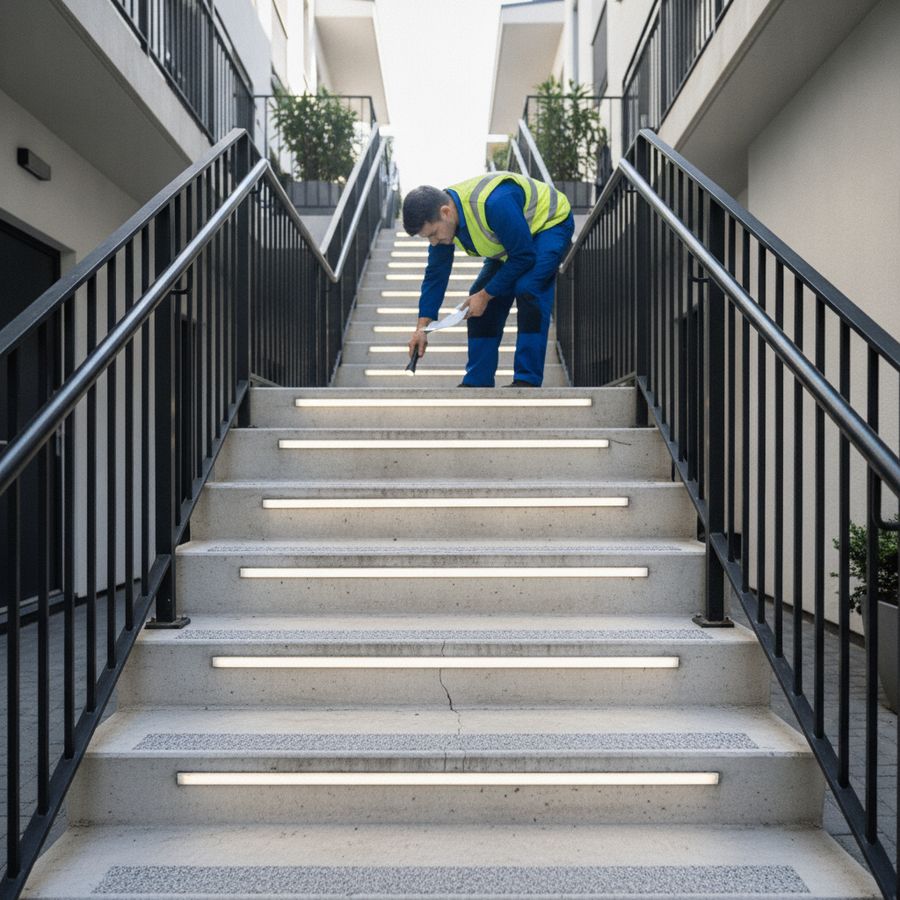
Stairs, hallways, sidewalks, and exterior walkways are among the most common sources of injury claims in rental and commercial property settings. These areas create daily exposure because they are used frequently by tenants, visitors, maintenance staff, and delivery personnel. From an insurance perspective, they are high-risk zones that deserve regular attention.
Hazards can include cracked concrete, loose handrails, worn stair treads, poor drainage, icy surfaces, inadequate lighting, or clutter left in shared paths. If someone falls and claims the danger should have been identified and fixed, your landlord liability insurance may be called upon. However, insurers also expect owners to take reasonable steps to prevent foreseeable harm.
Investors should create a consistent inspection routine for all access points and common areas. This matters even more in multi-unit buildings, mixed-use properties, and aging assets where deferred maintenance can quietly increase risk. Small defects are often the details that plaintiffs highlight after an accident.
Liability losses often begin with routine maintenance issues that seemed too small to prioritize at the time
Practical steps to reduce exposure include:
Repairing loose steps, railings, and cracked pathways quickly
Improving lighting near entries, stairwells, and parking routes
Documenting snow, ice, and spill cleanup procedures
Using warning signs and temporary barriers during repairs
Well-structured investment property insurance can help protect against claims linked to these areas, but prevention remains your first line of defense. Safer walkways not only reduce legal exposure, they also improve tenant satisfaction and protect the long-term value of your portfolio.
When Tenant Damage Becomes Your Responsibility
Not every loss caused by a tenant stays the tenant’s problem. In some situations, damage caused by a renter can become the landlord’s financial responsibility, especially when third parties are affected or when neglected repairs allow the damage to spread. Understanding that distinction is critical when evaluating property liability insurance and broader investment property insurance.
For example, if a tenant starts a kitchen fire through negligence, their renters insurance may respond first for their own liability. But if the incident causes injury to neighbors, damages shared areas, or reveals that smoke detectors were missing or defective, the property owner may still face a claim. The same can happen with water leaks, mold growth, or balcony damage if poor maintenance played a role.
Landlords also face exposure when they knew about dangerous tenant behavior and failed to act. Repeated complaints about unsafe alterations, hoarding in exits, or unauthorized animals may become highly relevant after an injury event. Insurance may help, but insurers will look closely at whether the owner ignored warning signs.
Tenant-caused damage becomes far more serious when it combines with owner negligence or harms other occupants
Situations where responsibility may shift toward the owner include:
Failure to maintain safety devices such as alarms or locks
Ignoring reports of leaks, structural weakness, or electrical issues
Allowing hazardous conditions in common areas to continue
Not enforcing lease violations that create injury risks
This is why real estate liability coverage should be reviewed alongside lease terms, maintenance procedures, and tenant screening practices. Good insurance is important, but clear operational controls are what help keep tenant damage from escalating into a larger claim against you.
Coverage Limits for Serious Injury Claims
A serious injury claim can exceed expectations very quickly. What begins as a fall on a stairwell or an accident in a parking area may involve surgery, long-term rehabilitation, lost future earnings, and legal expenses that continue for months or years. For investors, choosing the right coverage limit is one of the most important decisions in any property liability insurance policy.
Many owners focus on premiums first, but lower limits can create dangerous gaps. If a claimant is awarded more than your policy covers, you may have to pay the difference out of pocket. That can put rental income, equity, and even unrelated assets at risk depending on your ownership structure and local legal rules. This is why experienced investors often review limits in the context of property type, foot traffic, and overall net worth.
Higher-risk properties may require stronger protection, especially where there are multiple units, frequent visitors, older buildings, or shared amenities. In some cases, a primary policy should be paired with excess or umbrella liability coverage to extend protection beyond standard thresholds.
The true test of liability coverage is not whether you have a policy, but whether the limit can absorb a severe claim
When evaluating limits, consider:
The number of tenants and third-party visitors on-site
The presence of stairs, lifts, parking facilities, or shared grounds
Historical claims and the age or condition of the building
Your total portfolio exposure across multiple properties
Well-designed landlord liability insurance should align with the scale of your holdings, not just the minimum needed to bind coverage. Serious claims are uncommon, but they are exactly the events that can cause the greatest financial damage.
How Liability Insurance Fits Property Portfolios
As investors grow from one property to several, insurance needs become less about isolated policies and more about portfolio strategy. Property liability insurance should be viewed as a core layer of protection that works alongside building coverage, loss-of-rent protection, environmental cover, and other forms of investment property insurance. The goal is to make sure one claim does not destabilize the wider portfolio.
Different assets create different liability profiles. A vacant house, a rented apartment building, a mixed-use property, and a student rental all carry distinct exposure levels. Foot traffic, maintenance complexity, contractor activity, and tenant turnover can each change the amount and type of real estate liability you face. Investors who treat every property the same often miss important coverage differences.
Portfolio-level planning also helps identify where central oversight is needed. Standardized inspections, approved vendor procedures, incident reporting, and annual policy reviews can improve both safety outcomes and insurability. This matters because insurers often look favorably on owners with organized risk controls and clear claims histories.
Liability insurance works best when it is integrated into portfolio planning rather than purchased as a stand-alone afterthought
A strong portfolio approach often includes:
Reviewing liability limits across all owned entities and properties
Matching coverage to occupancy type and building use
Checking whether vacant or renovated properties need special terms
Coordinating primary and umbrella liability protection
For growing landlords, public liability insurance is not just a compliance or financing checkbox. It is a practical tool for preserving cash flow, protecting asset value, and supporting long-term expansion with more confidence and fewer surprises.
Key Exclusions Every Investor Should Check
Even comprehensive-looking policies can contain exclusions that materially affect how a claim is handled. Investors should never assume that all liability events are automatically covered. Reviewing exclusions carefully is one of the smartest steps you can take before relying on property liability insurance to protect a valuable asset.
Common exclusions often apply to intentional acts, pollution or environmental damage, professional services, criminal activity, and specific types of contractual liability. Additionally, some policies may limit coverage for vacancy, construction work, known defects, or injuries linked to unauthorized property use. If a building is under renovation or unoccupied for long stretches, your standard coverage might not perform as anticipated. To learn more about how to protect your property effectively, visit Finass Verzekert.Another area to check is how the policy defines insured persons and covered premises. If ownership sits across different legal entities, or if a manager, caretaker, or contractor relationship is not properly addressed, claim disputes can arise at the worst possible time. This is particularly important for investors with varied holdings and layered ownership structures.
The biggest liability surprise is often not the accident itself, but discovering the policy excludes the exact scenario that caused it
Before buying or renewing, review whether the policy limits or excludes:
Vacant properties or unoccupied units
Renovation, structural work, or contractor-related incidents
Mold, asbestos, or pollution-related claims
Short-term letting, subletting, or non-standard occupancy
Strong landlord liability insurance begins with understanding where protection stops. Ask detailed questions, compare wording carefully, and make sure the policy reflects how the property is actually used. Clearer terms today can prevent costly disputes tomorrow.


Reacties
Een reactie posten