Apartment Insurance in the Netherlands: Who Covers What?
How Apartment Blocks Split Building Responsibilities
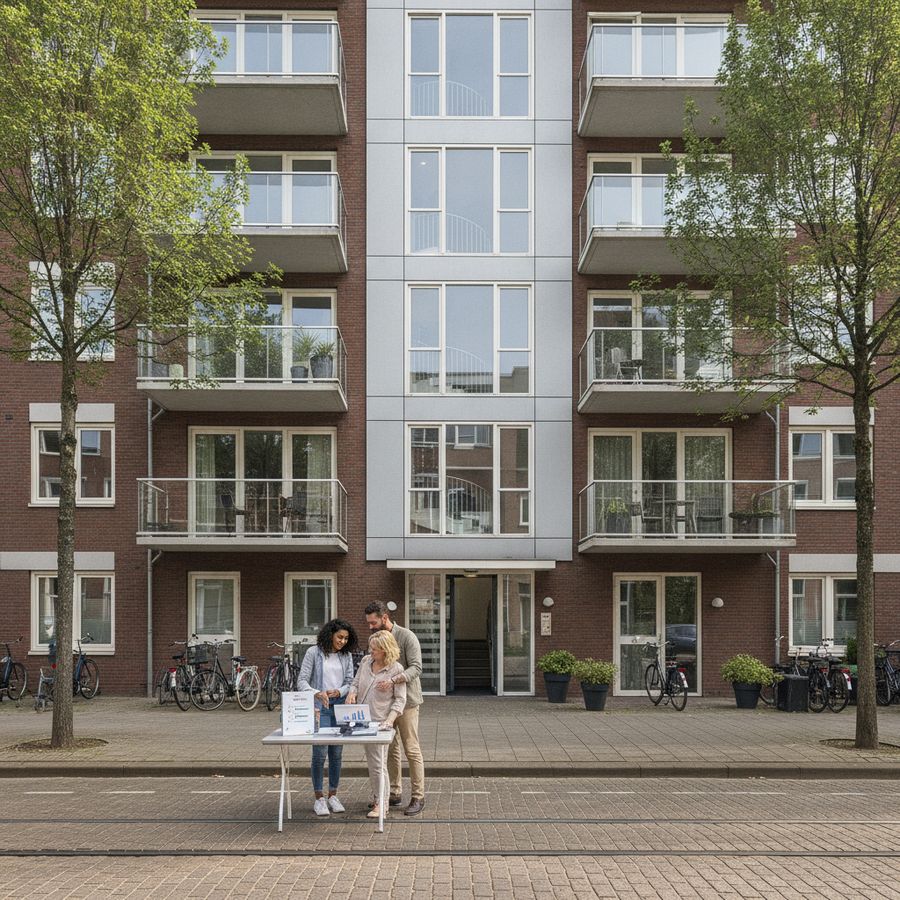
In the Netherlands, apartment ownership usually sits inside a VvE (owners’ association), and that is the starting point for understanding apartment insurance Netherlands. The VvE commonly arranges the master policy for the structure itself: the roof, exterior walls, foundations, shared stairwells, lifts, hallways, and other communal parts of the building. This is often the core building insurance apartment cover that protects the block against major insured events such as fire, storm, or certain types of water damage.
However, the exact split of responsibility is not identical in every building. The deed of division, house rules, and VvE policy wording determine where shared cover ends and where your private responsibility begins. Internal partition walls, flooring, kitchens, bathrooms, and upgraded finishes may or may not be treated the same way across different apartment complexes.
Always check the VvE policy schedule before assuming a loss is fully covered by the shared building policy
A practical way to think about it is:
VvE cover: the main structure and shared elements
Owner cover: private improvements, contents, and personal liability exposures
Tenant cover: personal belongings and tenant liability where relevant
That split matters because a claim can fail simply because it was filed under the wrong policy first.
What Owners Need Beyond the Shared Policy
A shared VvE policy is important, but it rarely gives apartment owners complete protection. Many owners wrongly assume that once the association pays for flat insurance on the building, everything inside the apartment is automatically included. In reality, you may still need extra cover for owner-installed upgrades, loss assessment charges, glass, legal help, or accidental damage depending on the policy wording.
If you renovated your kitchen, fitted premium flooring, installed built-in wardrobes, or upgraded the bathroom, those additions may exceed the standard level insured under the association’s policy. Some insurers classify these as owner’s improvements and expect them to be insured separately. That is why combining the VvE’s building insurance apartment with your own supplementary policy is often the safer approach.
It is also wise to review deductibles. A building claim might be accepted by the VvE insurer, but the excess could still be charged back to an individual owner if the damage originated in that unit or resulted from poor maintenance.
The shared policy protects the block, not every financial risk connected to your individual apartment ownership
For many homeowners, the right setup includes a mix of personal add-ons, good documentation of upgrades, and clear communication with the association before a problem arises.
Contents and Liability Cover Inside Your Flat
Inside your own apartment, the most relevant policies are usually contents insurance apartment and liability insurance. Contents insurance generally covers movable belongings such as furniture, electronics, clothing, artwork, and smaller household items if they are damaged by an insured event like fire, theft after forced entry, or certain water incidents. It is separate from the VvE building policy because your sofa, laptop, and dining table are not part of the building structure.
Liability insurance is just as important. If you accidentally cause damage to neighbours or shared property, personal liability cover may step in. For example, if a washing machine hose disconnects and water leaks into the apartment below, or if your child damages communal property, your private liability policy could become highly relevant.
Owners should also check whether fixtures are treated as contents or part of the apartment. That distinction can affect whether a claim falls under contents insurance apartment, a private owner’s policy, or the VvE arrangement.
Use contents cover for movable belongings
Use liability cover for damage you cause to others
Check policy wording for fitted items and improvements
Good insurance planning inside the flat is less about buying every possible policy and more about making sure there are no costly gaps between them.
Storm and Water Damage in Shared Spaces
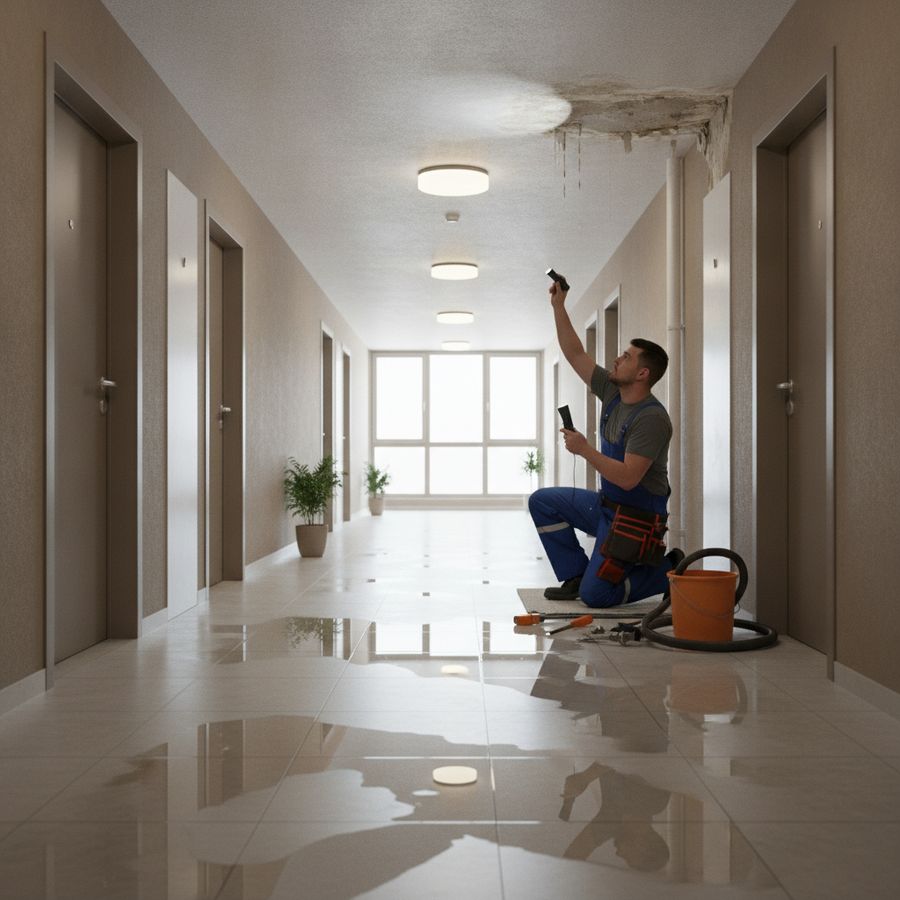
Storm and water claims are among the most common and confusing issues in apartment living. If strong winds damage the roof, blow in windows in a communal corridor, or cause rainwater to enter shared areas, the VvE’s building insurance apartment policy will usually be the first place to look. The same often applies when a burst pipe in a shared riser or technical room affects hallways, storage spaces, or multiple units.
The complication is that insurers do not only ask what was damaged; they also ask where the problem started and whether maintenance was adequate. A poorly maintained seal, blocked drain, or long-known leak can lead to reduced payouts or disputes over responsibility between the association and a private owner.
Cause, location, and maintenance history often matter more than the visible damage itself
When storm or water damage affects several parties at once, it helps to document:
Where the leak or damage first appeared
Which areas are communal and which are private
Photos, repair invoices, and previous maintenance reports
For anyone comparing apartment insurance Netherlands options, this is a reminder that claims handling is not just about cover limits. Clear definitions of shared spaces and prompt reporting can make a major difference to the outcome.
Renovations That Should Be Reported First
Renovating an apartment can improve comfort and value, but it can also change your insurance needs. Before carrying out major work, owners should tell the VvE and, where necessary, their own insurer. Structural changes, new bathrooms, kitchen relocations, underfloor heating, electrical upgrades, and plumbing reroutes may affect both risk and responsibility under apartment insurance Netherlands arrangements.
Some renovations create a bigger escape-of-water risk or increase replacement value inside the unit. Others may alter fire exposure, load-bearing elements, or noise insulation standards that the association monitors. If work affects shared pipes, ventilation systems, exterior walls, balconies, or the floor structure, prior approval is often essential.
Reporting first helps in three ways. It confirms whether the work is allowed, shows whether the VvE policy needs updating, and reduces the chance of a future claim being challenged because improvements were never disclosed.
Notify the VvE before starting major works
Keep contractor invoices and specification sheets
Update your own policy if the value of fixtures increases
Undeclared renovations can turn a straightforward claim into a long debate about ownership, permission, and insurable value
If you invest heavily in finishes or built-in features, review both your flat insurance and any supplementary owner cover as soon as the project is completed.
Claim Disputes Between Owner and Association
Disputes between an owner and the VvE usually begin with a simple question: who should pay? The answer becomes difficult when damage sits on the boundary between communal and private responsibility. A leak behind a wall, for instance, may involve a shared pipe, but the visible damage may affect only one apartment. In that case, repair of the source, reinstatement of finishes, and excess payments may all be treated separately.
Another common problem is underinsurance or differing expectations. An owner may think the association’s building insurance apartment policy includes upgraded interiors, while the VvE insurer may only recognise a basic original standard. Likewise, the association may expect an owner’s liability insurance to respond if negligence contributed to the incident.
To avoid escalation, keep the discussion evidence-based. Gather the policy schedule, deed of division, maintenance logs, expert reports, and photos. Ask for the insurer’s reasoning in writing if a claim is declined or partly accepted.
Most apartment insurance disputes are resolved faster when responsibilities are defined by documents, not assumptions
If the matter remains unclear, a loss adjuster, broker, legal adviser, or specialist in apartment insurance Netherlands can help interpret the overlap between private cover and association cover. Early clarification often prevents neighbour tensions from becoming formal disputes.
A Practical Checklist Before Renewal
Before renewing any policy related to your apartment, take some time to compare the VvE arrangement with your personal coverage. This annual review is one of the simplest ways to identify gaps in your contents insurance for apartments, flat insurance, and liability insurance. Renewal is not just about cost; it's essential to ensure that the policies align with how you live and what you own.
Start by checking if the insured value of your belongings has increased. Next, review any renovations made during the year and confirm if they are covered by the VvE, your own insurer, or both in different ways. If the association has changed insurers or policy wording, request the latest summary instead of relying on outdated assumptions.
Read the latest VvE building policy summary
Recalculate contents values for electronics, furniture, and valuables
Declare renovations and upgraded fixtures
Review excess amounts and water damage terms
Confirm that personal liability limits are still adequate
A brief annual review can prevent costly issues down the line. For most owners, the best strategy for apartment insurance in the Netherlands is a coordinated one: shared building coverage for the block, personal protection for the interior, and clear records to support any future claims.


Reacties
Een reactie posten