Who Pays for Soil Contamination in a Let Property?
Tenant Liability Versus Owner Financial Exposure
In a let property, the lease often says the tenant must pay for any soil contamination caused during its occupation. On paper, that sounds straightforward. In practice, the owner may still face the biggest financial shock. If pollution is discovered after a leaking tank, spilled chemicals, or contaminated firefighting water, the landlord usually cannot wait for a long liability fight before action starts.
The core problem is that tenant liability and cash exposure are not the same thing. A tenant may be legally responsible, but if that business has limited assets, weak insurance, or simply disputes the cause, the owner is left with a contaminated asset that becomes harder to refinance, re-let, or sell. Lenders and buyers rarely accept uncertainty around environmental conditions, even when the lease clearly allocates fault elsewhere.
The tenant may have caused the damage, but the owner often carries the immediate commercial risk.
This is why owners should think beyond legal wording and look at environmental liability in practical terms. A recovery claim against a tenant is only as good as the tenant’s solvency and evidence trail. Sensible landlords reduce that gap by requiring proof of the tenant’s environmental cover, restricting high-risk activities, and arranging remediation insurance in the owner’s own name where appropriate.
For many landlords, the real question is not only who is liable, but who can fund the clean-up quickly enough to protect the property’s value.
When the Municipality Can Force Remediation
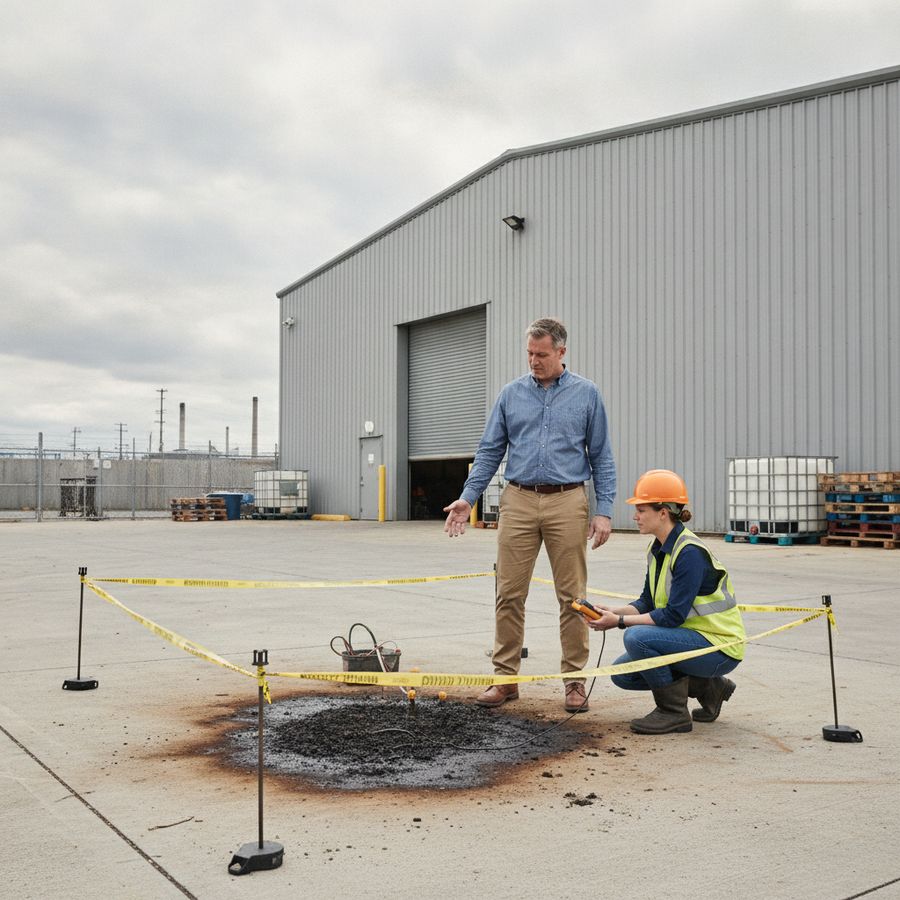
Municipal intervention usually begins when contamination threatens soil, groundwater, neighbouring land, or public health. Even if a tenant operated the business that caused the release, the authorities may still expect urgent action from whoever controls the site. That makes soil contamination in a let property more than a private lease dispute; it can quickly become a public regulatory matter.
Under modern environmental rules, the duty of care is often linked to the harmful activity itself. In broad terms, that means the polluter should prevent, limit, and reverse the damage. But from the municipality’s perspective, delay is the real enemy. If the tenant is missing, bankrupt, or uncooperative, the authority may push the owner to ensure investigations begin and a remediation plan is produced.
Common triggers for enforcement include:
leaks from fuel, oil, or chemical storage
firefighting water carrying hazardous residues into the ground
pollution spreading to neighbouring plots or surface water
evidence that contamination is ongoing rather than historic
Environmental liability therefore has a regulatory side as well as a contractual one. Owners sometimes assume the municipality will only pursue the operator, but authorities tend to focus on getting the site made safe first. That is why speed of notification, documentation, and expert sampling matters so much.
Authorities are focused less on lease wording and more on stopping contamination from spreading.
If you own a rental site with environmentally sensitive use, it is wise to prepare for the possibility that official remediation pressure may arrive before liability is fully settled.
How Bankruptcy Shifts the Risk to Owners
Bankruptcy is where theoretical protection often collapses. A lease may state that the tenant accepts full responsibility for pollution, but if the tenant enters insolvency, that promise can become practically worthless. In a let property, this is the moment when the owner’s financial exposure becomes real, because the contaminated land still exists even if the polluting business does not.
Once a tenant fails, several problems appear at the same time. Evidence may be incomplete, staff may disappear, maintenance records may be missing, and there may be little or no money left to fund expert investigation. Even if the owner can prove tenant liability, recovery may rank alongside many other unpaid debts and produce only a fraction of the clean-up cost.
The owner then faces a difficult commercial chain reaction:
the property may become harder to let
buyers may reduce their offers or walk away
banks may question security value
remediation costs may rise while the site sits unresolved
This is why owners often buy remediation insurance or environmental damage cover in their own name. Such cover can help fund remediation first, then leave the insurer to pursue any recovery from the polluter if that is still possible. It does not erase all exclusions, but it can stop a pollution event from turning into a long-term balance-sheet problem.
When the tenant disappears financially, the contamination does not disappear with them.
From a risk management perspective, the landlord’s job is to assume that some tenants will eventually fail and plan the environmental strategy accordingly.
Which Insurance Pays Before Liability Is Proven
One of the most important distinctions in this area is between liability insurance and first-party environmental cover. Standard business liability policies usually respond to damage suffered by third parties. They are not designed to pay immediately for remediation of your own site while everyone argues about fault. For landlords dealing with soil contamination, that delay can be costly.
By contrast, remediation insurance or environmental damage insurance is often structured to respond to clean-up costs at the insured location before final environmental liability has been proven in court. That can be crucial where contaminated soil, groundwater, or neighbouring land must be investigated fast. Instead of waiting for a judgment, the policy may fund urgent expert work, sampling, excavation, and disposal, subject to its terms and exclusions.
Owners should still read the policy carefully. Cover can vary significantly depending on whether the pollution event was sudden, gradual, linked to tanks, or tied to tenant activities. Existing contamination is typically excluded, and some insurers apply strict conditions around underground storage, reporting deadlines, and approved uses of the site.
The policy that pays first is not always the policy that decides liability in the end.
In many cases, the insurance sequence looks like this:
first-party environmental cover responds to urgent remediation costs
other property or liability policies may contribute in limited situations
the insurer may later seek recovery from the tenant or another liable party
For a let property, this structure can preserve liquidity and help protect value while responsibility is still being investigated.
What Lease Clauses Strengthen Recovery Options
A strong lease will not prevent every pollution event, but it can make recovery far more realistic. If a landlord wants a better chance of enforcing tenant liability after soil contamination, the lease should go beyond a vague sentence saying the tenant must comply with environmental law. Precision matters.
Well-drafted environmental clauses usually define which activities are permitted, what substances may be stored, and what systems require approval. They also set out reporting obligations, access rights for inspection, and end-of-term restoration duties. These details help create a clear record if a dispute later arises about when contamination began and who controlled the risk.
Useful lease protections often include:
a ban on underground tanks unless expressly approved
immediate written notice of spills, leaks, or enforcement contact
mandatory compliance with permits and handling rules
landlord rights to inspect storage, drainage, and records
an obligation to provide evidence of environmental insurance
entry and exit soil testing where risk justifies it
Environmental liability claims become much stronger when the owner can show a tenant had clear obligations and failed to meet them. Equally important, lease clauses should allow the landlord to step in, arrange urgent works, and recover those costs if delay could worsen the contamination.
The best lease wording does two things at once: it discourages risky behaviour and preserves evidence for recovery.
For any higher-risk let property, the lease should work hand in hand with insurance and baseline reporting rather than trying to solve everything on paper alone.
Why a Baseline Soil Report Matters
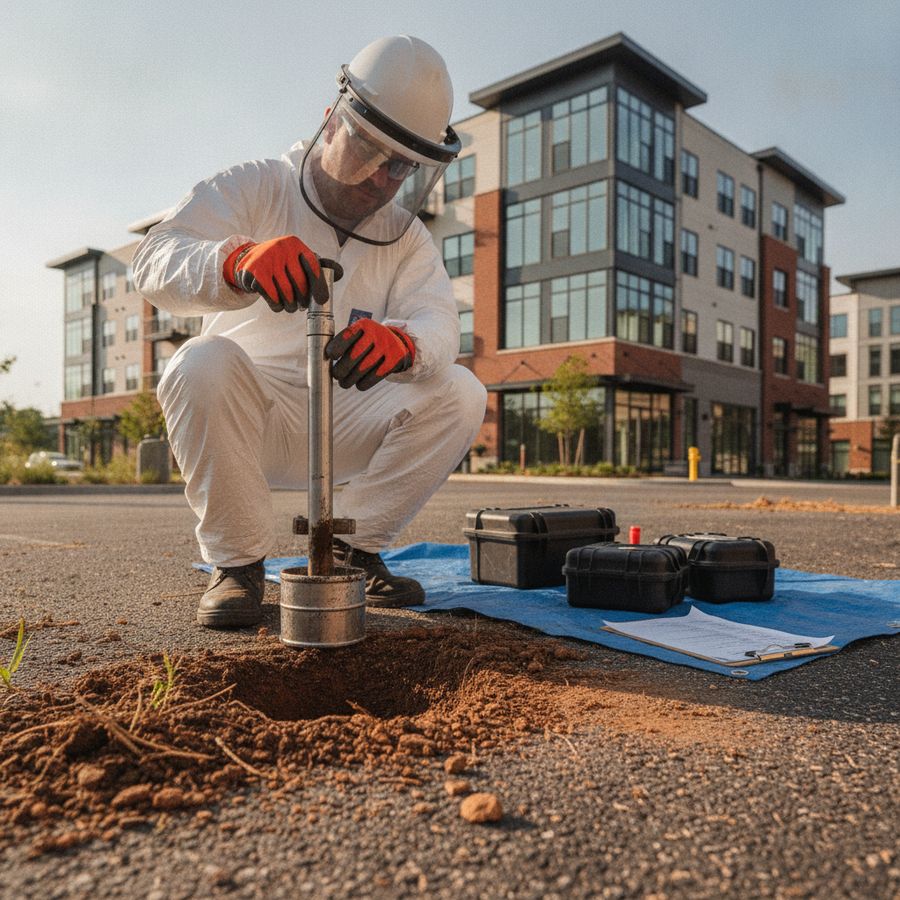
A baseline soil report is one of the most valuable documents a landlord can have before a tenant begins a risky use. Without it, proving whether soil contamination is old or new becomes challenging, and that uncertainty can hinder recovery efforts and insurance claims. In a let property, timing is crucial: the sooner the site's condition is documented, the easier it is to determine responsibility later.
A proper baseline does more than aid future litigation; it also helps insurers evaluate risk and ensures that existing contamination is not confused with a new insured event. If pollution is discovered years later, an entry report and exit report can clarify whether the issue arose during the tenant’s occupation, whether it spread, and if remediation should be linked to that lease period.
This is significant because most remediation insurance does not cover pollution that was already present. Owners who forgo the initial survey may find themselves stuck between an insurer claiming the damage is historic and a tenant arguing the issue existed prior to their arrival.
A baseline report transforms suspicion into evidence, and evidence is what drives both coverage and recovery.
In practical terms, a baseline soil report can support:
clearer attribution between owner and tenant
stronger insurance placement
faster expert response after an incident
better outcomes on refinancing or sale
For landlords, it is not just a technical document; it is a vital tool for managing environmental liability and safeguarding the long-term value of the property. To learn more about obtaining a baseline soil report, visit this link.


Reacties
Een reactie posten