Why Liability Insurance Leaves Soil Cleanup Uninsured
Where Liability Cover Stops for Landowners
Many landlords assume their liability insurance will respond whenever pollution is discovered on a property they own. In practice, that assumption is where problems begin. Liability cover is designed for claims made by third parties for injury or damage they suffer. It is not primarily built to pay a landowner’s own investigation, excavation, removal, and reinstatement bills when contamination is found on the insured site itself.
That distinction matters because authorities can require a property owner or user to deal with contaminated soil or groundwater even when no neighbour has sued and no court has found legal liability. The financial pain lands directly with the owner, not because someone else has proved damage, but because cleanup is required. Standard property owner insurance and public liability policies often leave that gap wide open.
Liability insurance protects against claims from others; it does not automatically pay the owner’s own soil cleanup costs.
For landlords, this can be especially frustrating. A leaking tank, a tenant’s mishandling of substances, or runoff after a fire may all create contamination on the landlord’s plot. Even then, the core question under a liability policy is usually: who is the third party, and what loss did they suffer? If the answer is mainly that the owner must restore their own land, the cover often stops there.
This is why environmental risk should be reviewed separately. Without dedicated pollution insurance or environmental damage insurance, the biggest environmental expense on the property may remain uninsured.
Why Soil Cleanup Is Not Third-party Damage
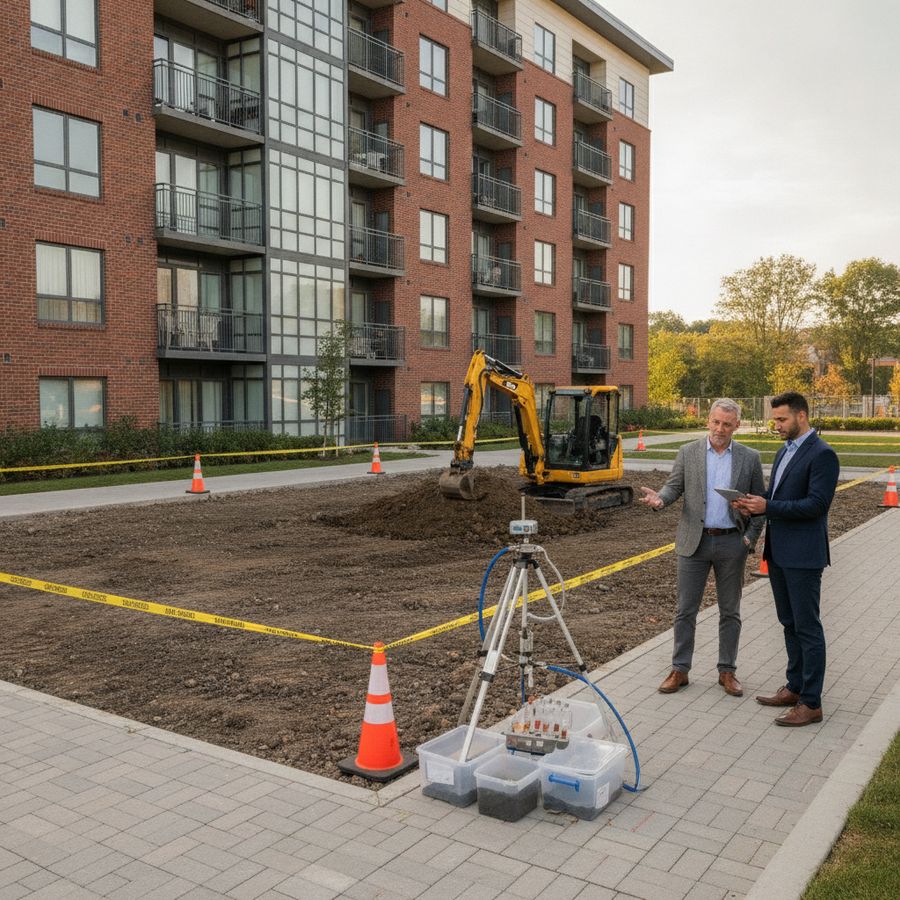
To understand why insurers often deny these claims, it helps to separate cleanup obligations from third-party damage. Soil contamination on your own land is usually treated as a cost of restoring your property or complying with environmental duties. It is not automatically seen as damage suffered by someone else. That is why soil cleanup costs frequently fall outside ordinary liability wording.
Third-party damage usually means a neighbour, customer, passerby, or another outside party suffers measurable injury or property loss. If pollution spreads beyond your boundary and harms adjoining land, surface water, crops, or buildings, then a liability discussion may begin. But even then, the section of the claim involving your own site can remain uninsured while only the affected third-party part is considered.
This split surprises owners because the largest invoice is often the one for their own grounds. Testing, drilling, contaminated soil removal, transport, groundwater treatment, and restoration can cost far more than a neighbour’s claim. Yet from an insurance perspective, those first-party expenses are fundamentally different.
Own-site contamination is often treated as your cost to remedy
Neighbouring property damage may trigger liability analysis
One incident can create both insured and uninsured elements
Cleaning up your own plot is generally not another party’s property damage, even if the contamination started suddenly.
That is why environmental damage insurance exists. It is built to address the owner’s direct cleanup burden instead of waiting for a third party to present a claim.
Common Pollution Costs Owners Still Face
Even when a landlord carries multiple policies, there are several environmental bills that can still arrive uninsured. The obvious one is excavation and disposal of contaminated soil, but that is rarely the only expense. In many cases, the true cost of a pollution incident expands through testing, reporting, site access, restoration, and specialist contractor work.
Owners may be responsible for a long chain of charges before the property is considered safe again. These can arise after a visible spill, after a fire, or during a sale, renovation, or tenant change when older contamination is uncovered. Standard property owner insurance usually focuses on the building, not the ground beneath it.
Soil investigation, sampling, and laboratory analysis
Excavation, haulage, and lawful disposal of polluted material
Groundwater pumping, treatment, and monitoring
Removal and replacement of paving, planting, and sub-base
Emergency measures to stop pollution from spreading further
Consultant, engineer, and environmental reporting fees
Another overlooked issue is that some losses remain excluded even under specialist cover. Pre-existing contamination, known issues, value reduction after cleanup, fines, and deliberate non-compliance may still sit with the owner. That makes policy wording just as important as having cover in the first place.
The biggest environmental bill is often not the spill itself, but the investigation and restoration that follow.
For that reason, landlords reviewing pollution insurance should assess the full chain of likely expenses rather than focusing only on dramatic headline events.
How Fire and Leaks Create Hidden Exposure
Some of the most expensive pollution claims do not begin with obvious industrial activity. They start with everyday property incidents: a basement fuel line slowly failing, an old underground pipe corroding, a heating oil tank leaking, or a building fire sending contaminated runoff into the ground. These events create hidden exposure because owners often discover the pollution long after the original trigger.
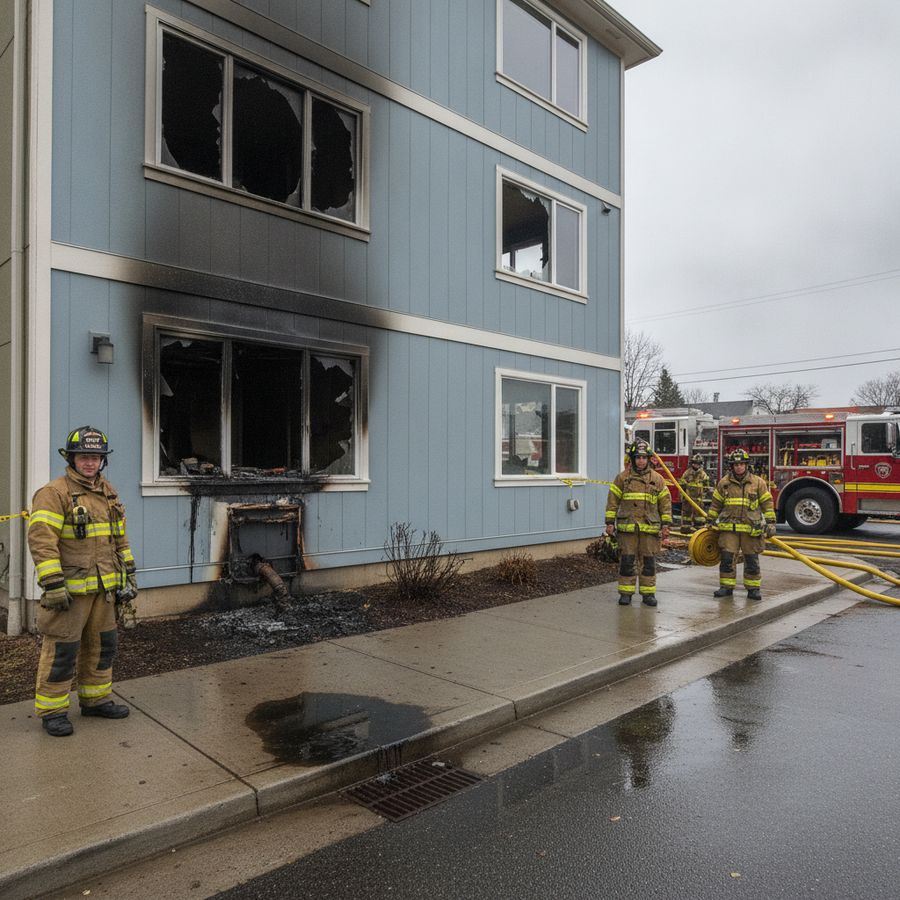
Fire is a particularly misunderstood source of environmental loss. A buildings policy may deal with structural fire damage, but the contamination caused by soot, extinguishing agents, melted materials, and firefighting water entering soil or groundwater can be treated differently. If there is no dedicated environmental damage insurance, the cleanup bill may sit outside the main property claim.
Leaks are equally dangerous because policy response often depends on whether the release is classed as sudden or gradual. A cracked tank that fails overnight may be viewed more favourably than a small seepage problem that develops over months. Yet gradual pollution is common in older let properties where tanks, drainage, and service lines are not inspected closely.
Basic environmental cover often responds to sudden events, while gradual contamination may require broader terms.
Landlords should pay close attention to risk factors such as:
Above-ground and underground tanks
Ageing pipework and joints
Vacant properties with reduced oversight
Tenants using oils, chemicals, or machinery
These are the quiet conditions that turn a normal property risk into major soil cleanup costs.
When Separate Environmental Damage Cover Applies
Environmental damage insurance becomes relevant when the core loss is not a liability claim from someone else, but the cost of investigating and remediating contamination on your own site or at locations affected by migration from your site. For landlords, that can include pollution discovered after a leak, contamination caused by tenant activities, or soil and water damage following fire and firefighting efforts.
This specialist cover is valuable because it is designed around cleanup mechanics rather than pure legal liability. Depending on the policy, it may pay for your own site, neighbouring land affected by spread, emergency measures to contain the incident, and certain reinstatement expenses once polluted material has been removed.
However, not every policy is equally broad. Some only cover sudden and unforeseen events, while others can be extended for gradual contamination. The difference is critical for older real estate, mixed-use premises, investment properties, and sites with oil tanks, workshops, storage risks, or long-standing underground infrastructure.
Best suited where contamination can affect your own land first
Important for landlords with tenant-related environmental risk
Useful where fire, storage, tanks, or drainage increase exposure
Worth reviewing for owners of older or multi-unit properties
Separate environmental cover exists because liability insurance and buildings insurance leave a different problem behind: the owner’s own cleanup obligation.
In other words, pollution insurance is not duplicate cover. It fills a distinct gap. For many property owners, it is the only policy built to address the full reality of contamination and the resulting soil cleanup costs.
Questions Landlords Should Ask Before Renewal
Renewal is the perfect opportunity for landlords to assess whether their current coverage aligns with real environmental risks. Many property owners simply renew their liability insurance without considering changes that could significantly impact pollution exposure, such as shifts in property condition, tenant profiles, or site circumstances. A brief review can help prevent costly uninsured claims in the future.
Start by asking practical questions: Has the property ever housed tanks, fuel storage, workshops, or experienced leaks? Are there underground pipes, drains, pits, or older service lines? Have tenants altered their usage, begun storing hazardous materials, or increased fire risk? Is there a baseline soil report to differentiate between old contamination and new incidents?
Does my current liability policy exclude environmental damage on my site?
Do I have separate environmental damage insurance?
Is coverage limited to sudden events, or does it encompass gradual pollution?
Are tenants named, required to insure, or contractually responsible?
What exclusions apply to known or pre-existing contamination?
Are fire-related pollution and firefighting runoff included?
What limits and excess fit the location and likely cleanup scenario?
It's also wise to inquire about the claims process and whether the insurer requires immediate consultation before any excavation or emergency work begins. Proper timing and disclosure can significantly affect recoverability.
Landlords should verify not just what is insured but also which environmental costs remain their sole responsibility before renewal.
A thorough review of property owner insurance, environmental damage insurance, and tenant obligations can transform a routine renewal into a robust risk protection strategy.


Reacties
Een reactie posten